Motors · Specialized
Specialized · Turbo Full Power (early Levo / Kenevo)

2.0

Specialized's first full-power motor: the steel-housed Brose mid-drive co-developed exclusively for the original Turbo Levo FSR and Kenevo. Whisper-quiet carbon-belt drive that defined the brand's early eMTB character.
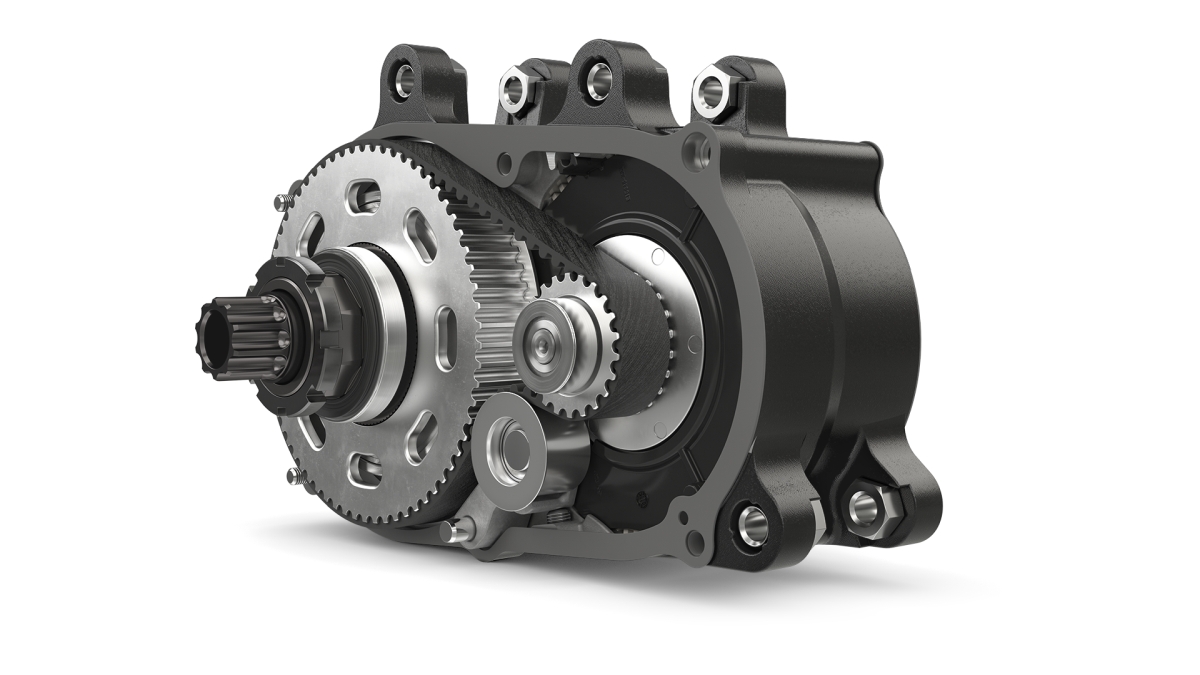
2.0 eMTB motor
The Brose belt-drive mid-motor that powered the early Specialized Turbo Levo and Kenevo — shown with the housing removed to reveal the carbon-belt drive.
0250500406080100120450 Wcadence (rpm) →power (W)

Estimated, illustrative trace — no independent dyno of the steel Drive S has been published. Brose belt-drive units of this era build power smoothly across a broad mid-cadence band and taper gently at high rpm; the curve is drawn to a claimed ~450 W peak, not measured.

The verdict

Specialized 2.0 is where the Turbo Levo story begins. Launched in 2015 and running through to 2018, it is a Brose mid-drive built to Specialized's spec, housed in a forged steel/aluminium case rather than the magnesium that would later define the Drive S Mag. Specialized quotes 90 Nm of torque and a 250 W nominal rating, with a claimed peak of around 450 W and up to 380% support in Turbo. The complete steel unit with its fairing weighs about 3.4 kg — the later magnesium Drive S Mag is the one that trimmed this to roughly 3.0 kg.

What set it apart at launch was the carbon-belt internal drive. Where rivals used gear trains, Brose's belt gave the Levo a hushed, almost mechanical-feeling assist that is still among the quietest of its era. Power builds calmly and naturally rather than snapping in, and it rewards a steady, seated spin over aggressive stamping. It never had the urgency of a modern 100 Nm motor, but for trail riding it felt organic and unintrusive.

The catch is age. This is the pre-Mag steel unit, and the early Brose belt-drive design carried belt-durability concerns that Specialized eventually addressed with an extended four-year warranty on affected motors and a belt-load-reduction firmware retrofit. It is fully superseded now, but as a used buy with a clean belt history it remains a quiet, likeable trail motor.

“The motor that gave the first Levo its hushed, belt-driven calm — and Specialized its eMTB identity.”

Sustained power & heat

How long the headline number actually lasts under sustained climbing load.

Specialized M1 504 Wh

Period packs were 504 Wh (FSR S-Works/Expert), 460 Wh (most Levo FSR) and 405 Wh on some early/hardtail builds — not the 700 Wh of much later Levo generations. No published derate trace for the steel unit.

Character

Rider input
Brose/Specialized quote up to 380% support in Turbo for the steel Drive S (the magnesium 2.1 later raised this to 410%). Wants a steady, seated mid-cadence spin for full assist rather than aggressive stamping.
On the trail
Calm, gentle and natural rather than punchy — a quiet, organic trail motor that prefers a relaxed cadence over high-rpm urgency.
Noise
No independently measured dB figure exists for the steel Drive S, so the 'quiet' claim stays qualitative. In subjective terms the carbon-belt drive is the headline Brose 'whisper' — free of the gear whine of an era Bosch Performance CX (Gen 2) or Shimano STEPS E8000, with only a mild belt whirr under load.
Efficiency
Frugal for its class thanks to the low-friction belt drive, though down on outright range versus modern high-capacity systems and limited by period batteries of 405–504 Wh.

The case for and against

Strengths

  • Whisper-quiet carbon-belt drive vs gear-driven era rivals
  • Natural, organic power delivery
  • 90 Nm claimed torque — strong for its 2015–2018 era
  • Up to 380% support in Turbo
  • Extended 4-year warranty covered early belt issues

Compromises

  • Steel housing likely de-rates sooner than the later magnesium Mag (qualitative, no published dyno)
  • Early belt-drive durability concerns
  • Modest ~450 W claimed peak vs modern motors
  • Sealed, dealer-only Brose servicing
  • Fully superseded — used-only, ageing parts ecosystem

How it stacks up

Against the gear-driven motors of 2016–2018 it traded outright snap for quietness and a smoother, more natural feel. The era Bosch Performance CX (Gen 2) delivered 75 Nm with around 300% max support and a more aggressive, immediate hit — the Brose answered with more torque on paper (90 Nm) and up to 380% support, but a calmer, belt-hushed delivery. Shimano's STEPS E8000 of the same period (70 Nm) was similarly snappier but noisier. Its own successor, the magnesium Drive S Mag (Specialized 2.1), kept the belt-drive character but added thermal headroom and pushed support to 410%. Today's 100 Nm-plus motors comfortably out-muscle it.
OWNER INTELLIGENCE
Most owners report no problems · 11,593 posts from 1,506 members analysed.
176Water ingress: left crank bearing, needle roller bearing ('stiff cranks'), connector corrosion · typical onset: Seasonal (UK winters) rather than mileage-based; stiff-cranks-backwards is the canonical…
132Serial replacement loops - the multi-motor owners · typical onset: Replacement motors failing at similar or shorter intervals than originals - strongly…
107Sprag clutch bearing failure (the misdiagnosed twin of the belt story) · typical onset: 250-450 miles in the worst serial case; ~8,000 km for an original sprag on a well-kept…
10,000 km on a 2019-bought Levo Brose, still intact - while all 5 Bosch motors in the same riding group (also 2019 bikes) had been replaced for bearing…
Read the full owner report →
Back
Top