P100
Gobao's P100 is the value-tier Chinese full-power mid-drive that ambushed the establishment: 100 Nm, a 750 W maximum with a published 87% efficiency, and a Velomotion dyno verdict that placed its peak level with the Sachs RS.
Rises strongly off 50 rpm to a peak the manufacturer holds to about 70 rpm (740 W claimed / ~700 W measured), then a steady fall above 100 rpm that turns sharp by 120 rpm.
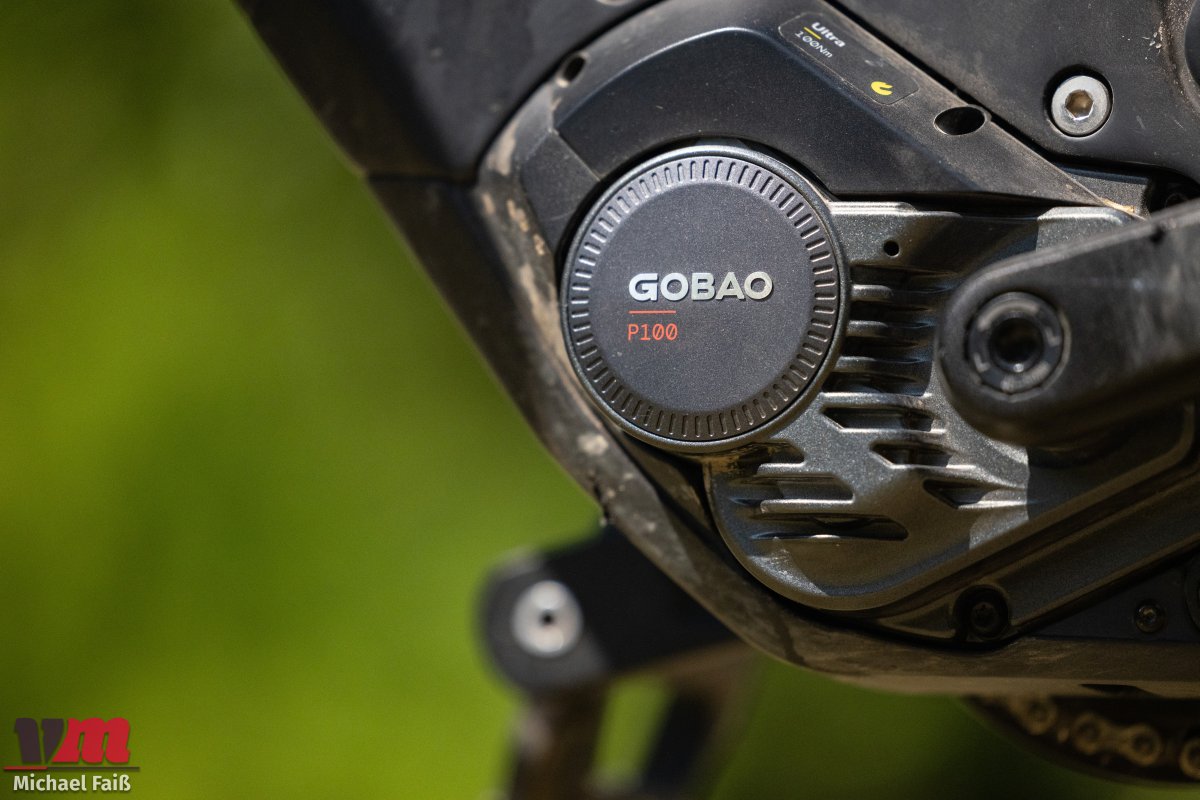
Gobao P100 is the motor that proves the budget gap has closed. Built by a Chinese e-controller specialist and fitted to direct-sell brands like Hepha, it claims 100 Nm and a 750 W maximum (740 W held to 70 rpm), with a published 87% peak efficiency. On the ebike-lab dyno it returned 512 W from only 100 W of rider input and almost 700 W at peak, ranking behind just the Shimano EP801 and Avinox M1 in the sub-100 W rider-input band. Velomotion placed its maximum output level with the Sachs RS and ahead of Bosch's newest unit, a remarkable result for a value-tier motor.
Its real signature is heat. Across 15-20 minutes of continuous full load it showed no measurable power loss and the magnesium housing stayed below 80 C, putting its thermal stability among the very best on test. Where it gives ground is cadence: output is strong from 50 rpm and the manufacturer holds peak to about 70 rpm, but it tails off above 100 rpm and drops sharply by 120 rpm, so spin-happy riders lose out. Velomotion also flagged a roughly half-second engagement delay, a loud rattle in the freewheel and the absence of a progressive assist mode.
Physically it is a 2.8 kg, 36 V magnesium unit with a standard Q-factor and a three-point frame mount, a footprint Velomotion put on par with Bosch and Shimano. The OEM app exposes three named modes - Eco, Tour and Turbo - each with adjustable maximum torque, support percentage and start assist, paired with a bright stem-side colour display (a 3.5" trekking display is also offered). Take it for what it is and it is excellent value: a Bosch-CX-class torque figure and bulletproof heat management at a lower price, best for riders who grind a steady 60-90 rpm rather than chase a high cadence.
Sustained power & heat
How long the headline number actually lasts under sustained climbing load.
No derating over the test; magnesium housing stayed under 80 C.
Character
The case for and against
Strengths
- 512 W at 100 W rider input - beaten only by EP801 and Avinox M1 in that band
- Published 87% peak efficiency; near-peak output from ~125-140 W input
- Outstanding thermal stability - no derating in 15-20 min, magnesium housing under 80 C
- 100 Nm torque at a value-tier price, level with Bosch-CX-class motors
- Light at 2.8 kg with a standard Q-factor and Bosch/Shimano-comparable footprint
Compromises
- Power drops above 100 rpm and falls sharply by 120 rpm
- Loud rattle in freewheel mode; no published dBA figure
- Roughly half-second engagement delay
- No progressive assist mode; OEM-only support and app